The Trees Above the House Set the Date
Fall gutter timing is often discussed as if one weekend works across Ann Arbor. The canopy makes that unlikely. Different trees release material at different moments, wind strips one block before another, and sheltered branches can hold leaves after exposed crowns look bare. The relevant clock is directly above the roof.
Begin by watching the dominant maples and oaks that can deliver debris to your roof planes. When most of their leaves have released, a cleaning is more likely to stay clear into winter. That is a planning principle, not a reason to tolerate an existing blockage.
Too Early Can Mean a Fast Refill
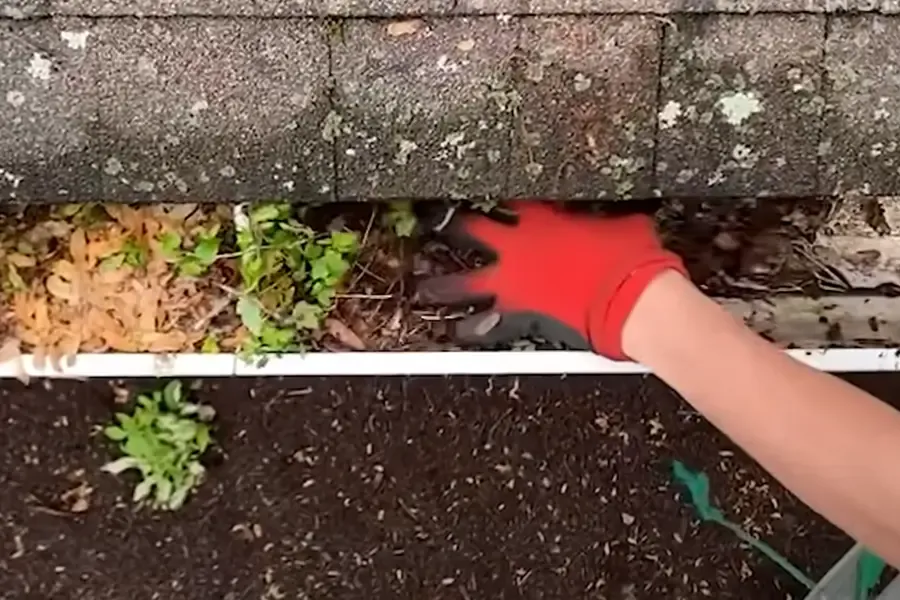
An early appointment produces a clean channel, but the canopy may still contain most of the eventual load. Leaves then fall onto the same roof and move toward the same outlets. Under dense cover, the result can be a second meaningful accumulation.
If water is moving normally, the remaining crown is a useful signal to wait. Look at branch position rather than the yard alone; leaves already raked from the ground say little about those still above the rear roof slope.
Early cleaning can still make sense when a gutter has filled from a first wave, when one outlet is already obstructed, or when access later in the season will become unsafe. The reason should be current condition or access, not an arbitrary date.
Too Late Can Bring Cold-Weather Access
Waiting for every last leaf can push work into wet, icy, or unstable conditions. A few stragglers on the branches are less important than a safe setup. Once the dominant load has fallen, the remaining benefit of delay may be small compared with colder surfaces and shorter drying windows.
The objective is an open path before roof snow and repeated freezing. Leaves that remain wet in a gutter hold water at the eave. A covered outlet prevents meltwater from entering the downspout. Cleaning removes that controllable storage layer before winter, although it cannot prevent every ice dam.
Current Overflow Overrides Ideal Timing
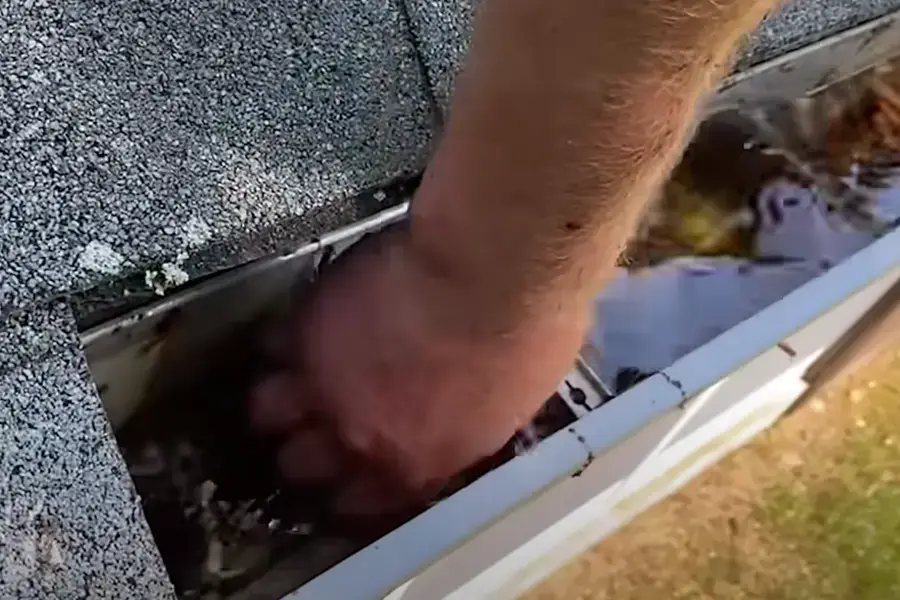
Water spilling over a packed section is direct evidence that capacity has been reduced. A concentrated spill above one downspout often points to a local restriction. Water along a whole run may indicate widespread material or a pitch issue. In either case, waiting solely for later leaves ignores a function that is already lost.
Observe from the ground during rain, then wait for dry conditions before any access work. Note the location and whether guards are present. Those details make gutter cleaning more targeted.
Guarded Gutters Follow a Surface Schedule
Guards can change where autumn material rests. Broad leaves may remain on top and blow away when dry, or they may catch on roof transitions and stay. Stems can lodge in openings. Fine particles enter beneath some screens.
Do not assume that a covered gutter is clear because leaves are not visible inside. Look for surface mats and changes in water entry. The ideal timing remains after the dominant load, but the task may be surface clearing and inspection rather than open-channel removal.
Valleys and Inside Corners May Need Earlier Attention
A valley concentrates leaves and water from two roof planes. Inside corners shelter wet material from wind. These places can block before straight runs elsewhere are full. If one concentration point repeatedly fails during the leaf drop, it can justify earlier limited attention followed by a final check later.
This is also a reason to remove safely accessible loose roof debris before clearing the channel below. The upstream supply should not be left ready for the next rain to deliver.
Use a Simple Decision Sequence
First, check present function. If the gutter is spilling, the outlet is blocked, or wet debris fills the channel, address it. Second, look at the crowns that affect the roof. If most leaves remain and flow is normal, wait. Third, consider access conditions. Choose a dry, stable period rather than chasing the final leaf into ice.
After cleaning, confirm that outlets, downspouts, and extensions complete the route. A clear gutter that empties beside the foundation has only moved the water problem.
Leave Room for a Second Look
Strong wind can deliver a late wave even after good timing. A ground-level check after the next debris event is often enough. Do not assume another full cleaning is required; verify whether the channel or guard surface actually changed.
For help choosing the window at your property, call (734) 838-4946. Our DIY safety guide can also help decide whether the access belongs in a homeowner plan or a professional quote.