A Clog Becomes a Small Wet Habitat
A clean metal channel is a poor place for much to live. Add leaves, fine organic particles, water, shade, and time, and the conditions change. The debris holds moisture. Decay breaks material into smaller pieces. Seeds arrive from the trees above. Insects find shelter in the layered mass.
This does not mean every clogged gutter contains a dramatic infestation. It means the same conditions that block drainage also create a temporary habitat. Removing the material restores the mechanical route and removes what supports that habitat.
Seedlings Are the Most Visible Result
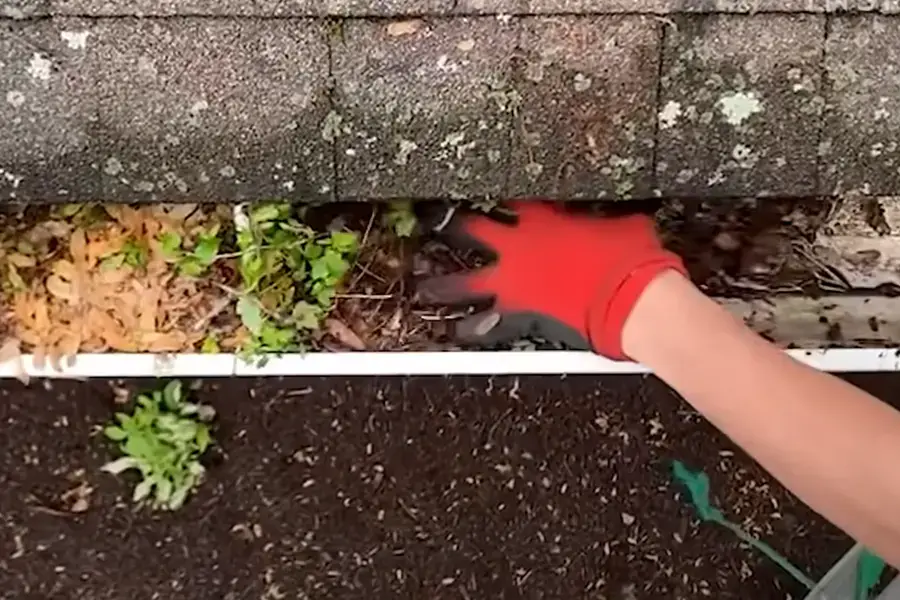
Maple samaras and other seeds land on the roof and wash toward the eave. If they enter a dry, open gutter, they may pass through. If they encounter damp leaf residue, they remain. Organic particles provide a rooting medium, and stored water supports germination.
A line of small plants therefore tells a clear story: debris has accumulated and stayed wet. Pulling only the visible stems is not enough. The roots and surrounding material need to be lifted out, and the outlet below should be cleared so the channel does not immediately return to the same condition.
Decay Produces the Sludge
Leaves do not remain crisp. Water, temperature changes, and biological activity break them down. The fragments become a dark fine layer that settles into seams, low spots, and outlet openings. Catkins and seed fluff bind easily to this residue.
Sludge can remain after the bulky leaves are removed. It stores water against the channel and reveals low areas where drainage is incomplete. Once the run is cleared, persistent pooling may point toward pitch or support. That is a gutter repair question rather than a reason to repeat surface cleaning.
Insects Use Shelter and Water
Layered debris offers protected spaces. Standing water can also provide conditions used by insects. The exact occupants vary, and seeing one insect near a gutter does not prove a colony inside it. Avoid broad pest claims from a distant observation.
The practical response is the same: remove the wet material, restore flow, and eliminate unnecessary standing water. If a distinct nest or stinging-insect hazard is present, do not disturb it casually from a ladder. A pest professional may be the appropriate first call.
Birds and Small Animals May Investigate
Twigs and leaves at a sheltered roof edge can attract exploratory activity. Downspout openings also create protected-looking cavities. Again, signs should be interpreted carefully. Noise near an eave can come from several building locations, and gutter service should not be presented as wildlife diagnosis.
Before clearing a suspected nest, confirm the situation safely and consider whether wildlife rules or specialized removal apply. Do not reach blindly into debris or a downspout.
Guards Change the Shelter
A guard can keep broad material and larger animals out of the channel. It can also hide fine debris underneath or create a protected space if edges are open. Catkins and fluff may form a wet layer on top of mesh. Twigs can bridge the surface and catch more leaves.
Periodic inspection remains necessary. A cover should be evaluated by what it excludes, what it collects, and how safely the remaining material can be removed. See the gutter guards overview before assuming a screen eliminates habitat conditions.
Wear Protection Around Unknown Debris
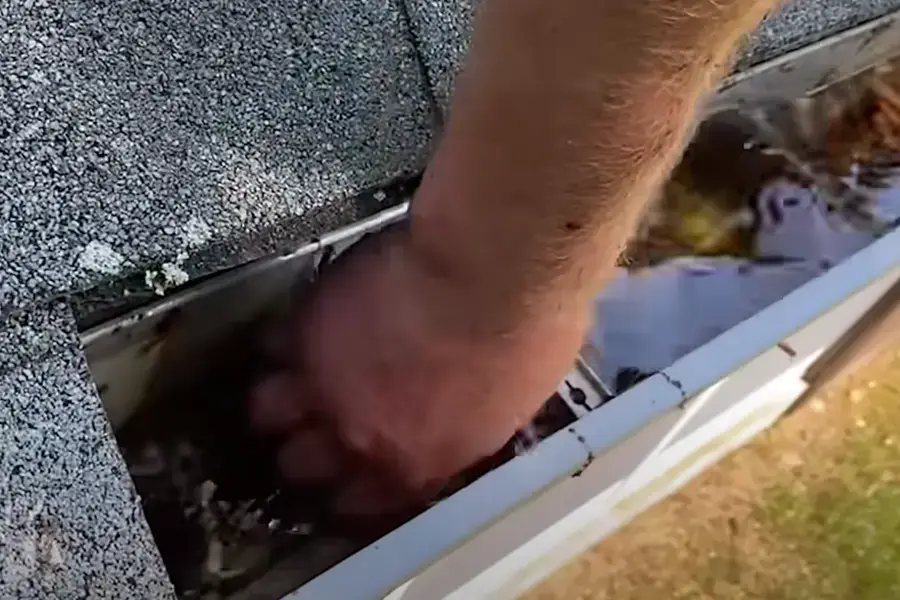
Gutter material can contain sharp fragments, decayed matter, insects, and hidden fasteners. Suitable gloves and eye protection are basic precautions. Use controlled collection rather than dropping material where people or pets travel. Wash exposed skin and tools after handling wet organic debris.
Do not climb if the eave is tall, the roof or ground is wet, electrical lines are nearby, or the gutter is loose. The contents may be ordinary while the access remains unsafe.
Prevention Follows the Debris Seasons
Under Ann Arbor maples and oaks, observe after spring samaras and catkins, then again after autumn leaves. Remove material when it begins to impede flow or hold a persistent wet layer. An open lot may need fewer checks. The trees above the roof determine the supply.
Downspouts and extensions also matter. A clear channel with a plugged elbow still stores water, while a free downspout that empties beside the wall leaves a different drainage issue.