Samaras Behave Differently From Leaves
Maple “helicopters” are samaras: paired seed structures shaped to travel away from the tree. On an Ann Arbor roof, that shape also helps them enter narrow spaces. They slide along shingles, lodge against screens, and stand across gutter outlets. A small local pile can matter even when the rest of the channel looks mostly empty.
This spring load explains why a roofline cleared after autumn may still develop a restriction before summer. The gutter has received new material with different geometry, and its most vulnerable point—the outlet—has not become any larger.
The Roof Sorts Material Before the Gutter Does
Wind and rain move samaras down the roof. Valleys concentrate them. Dormers and additions create sheltered corners. A straight exposed eave may shed them quickly, while an inside return catches them in a quiet pocket.
Once they reach the channel, flowing water carries them toward the downspout opening. Their wings overlap and catch stems, catkins, and leaf fragments. The obstruction grows from the outlet backward rather than filling the gutter evenly.
This pattern can make diagnosis confusing from below. You may see overflow near one end without seeing a dramatic quantity of debris. The location is the clue.
Old Residue Makes the Clog Denser
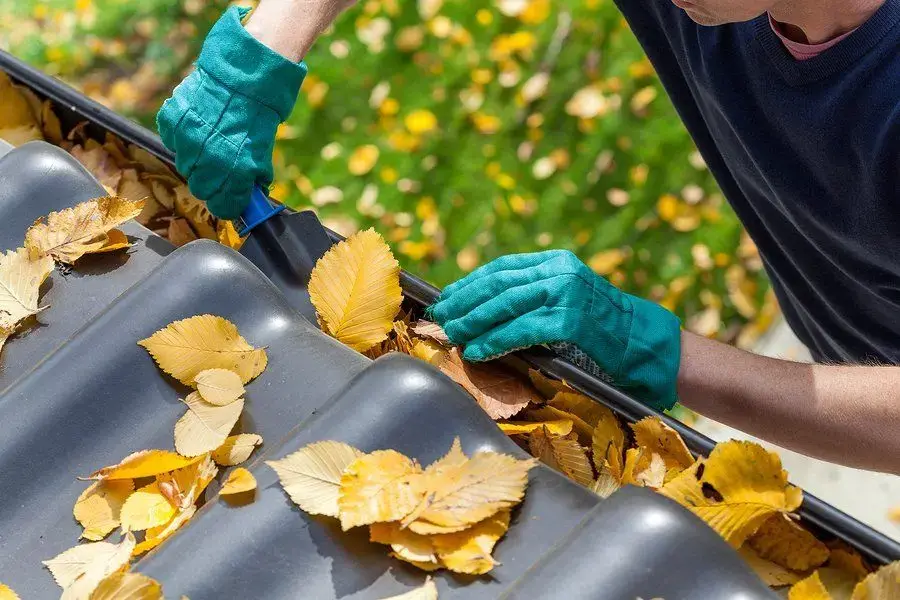
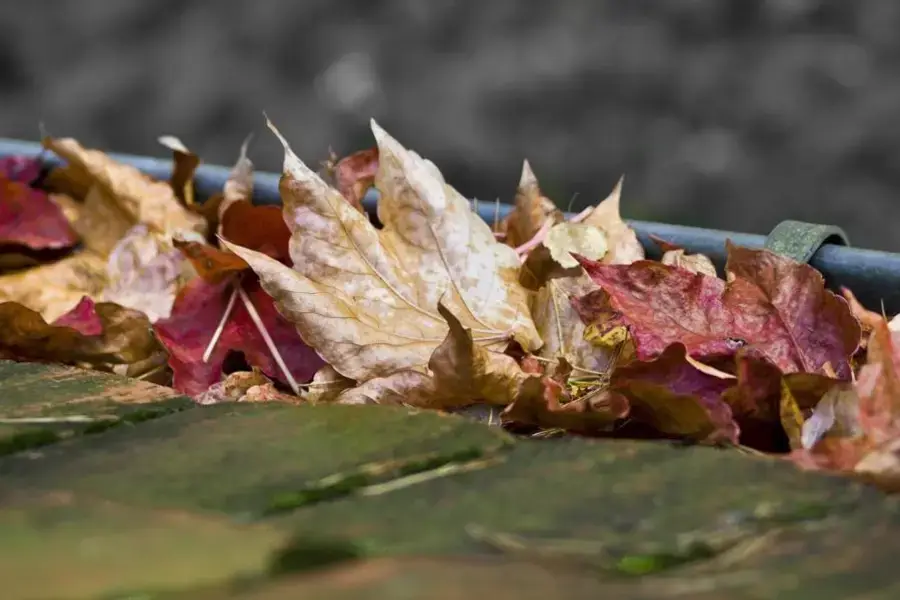
A perfectly dry, clean channel lets some samaras move freely. Most working gutters contain at least a fine organic film. If autumn residue remains, spring seeds adhere to it. Rain flattens the mixture and small particles fill the gaps.
Moisture retained in that material creates a place where seeds can germinate. A small plant in the gutter is not just a visual oddity; it shows that organic material and water have remained long enough to support growth. Removal should clear the root and surrounding mat without forcing it into the downspout.
Screens Can Catch the Wings
Large-opening screens block broad leaves but may accept or trap samaras. A seed can stand through an opening while its wing stays above. More material then catches around it. Fine mesh keeps more seeds out of the channel, yet they can layer across its surface and reduce the area available for water entry.
Reverse-curve covers also have transition points where material can collect. No guard makes the spring event disappear. The maintenance location changes from the channel to the cover surface, entry edge, or outlet area beneath. Our gutter guard guide compares these tradeoffs.
Watch the Water, Not Just the Seeds
A scattering of dry samaras does not automatically require service. The important evidence is whether they have formed a mat, covered an outlet, held moisture, or changed the flow. Observe from safe ground during rain. Overflow concentrated above one downspout suggests checking that transition.
If water enters normally and downspouts discharge as intended, a cleaning may be unnecessary. Wind may remove loose surface material. This distinction keeps a spring check from becoming an automatic sale.
Choose Timing After the Main Seed Fall
As with autumn leaves, cleaning before the dominant debris event is finished can produce a quick refill. Watch the maples that actually reach the roof. If most samaras remain on the branches and drainage is normal, waiting can capture more of the load in one visit.
If an outlet is already blocked, present function takes priority. Clear the obstruction, then plan a ground-level recheck after the remaining seeds fall. The second look does not assume another cleaning; it confirms whether one is needed.
Clear the Entire Outlet Route
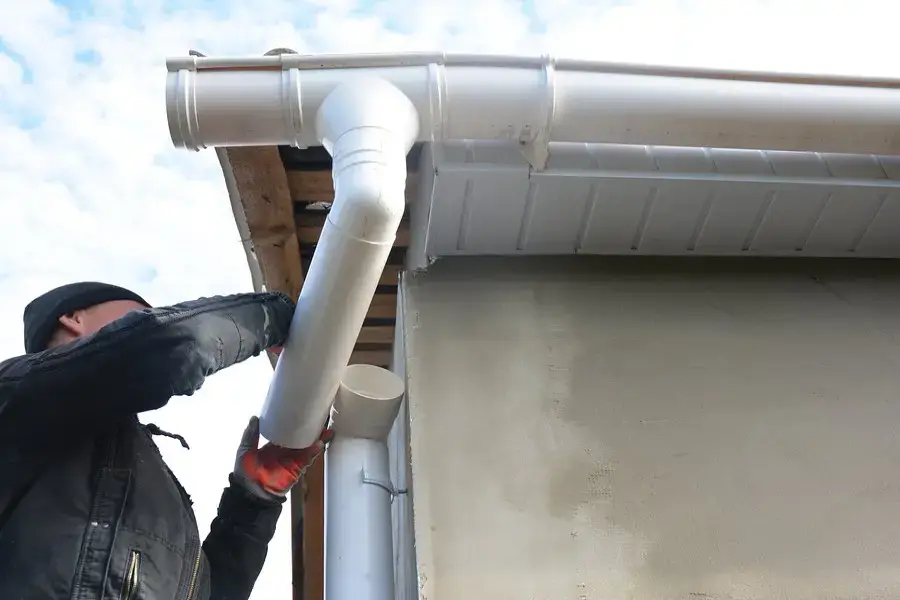
Removing seeds from the horizontal run is incomplete if a plug remains just below the opening. Downspout elbows can hold compacted material. The lower extension may also be crushed or disconnected. A useful gutter cleaning follows the route through the downspout and checks where water releases at ground level.
Avoid pushing a dense seed mat blindly into the outlet. Lift material away and expose the opening first. If a clean channel still holds water, the problem may be pitch or support rather than samaras.
Add Spring to the Property Calendar
The practical calendar has observation points, not mandatory appointments. Look after maple seed fall, after oak catkins, and after the main autumn leaves. Over time, the roof reveals which event creates a restriction. Some properties will need both spring and fall attention; others will not.
For help with a spring outlet problem, call (734) 838-4946. Describe where the maples stand, whether guards are present, and where water spills for a free quote based on the actual clog pattern.